Guide
Where to buy THCA flower online: how to check any seller
Straight answer
Any seller can say lab-tested. Here is how to check a THCA flower seller in ten minutes: the COA, the business behind it, the policies, and the law where you live.
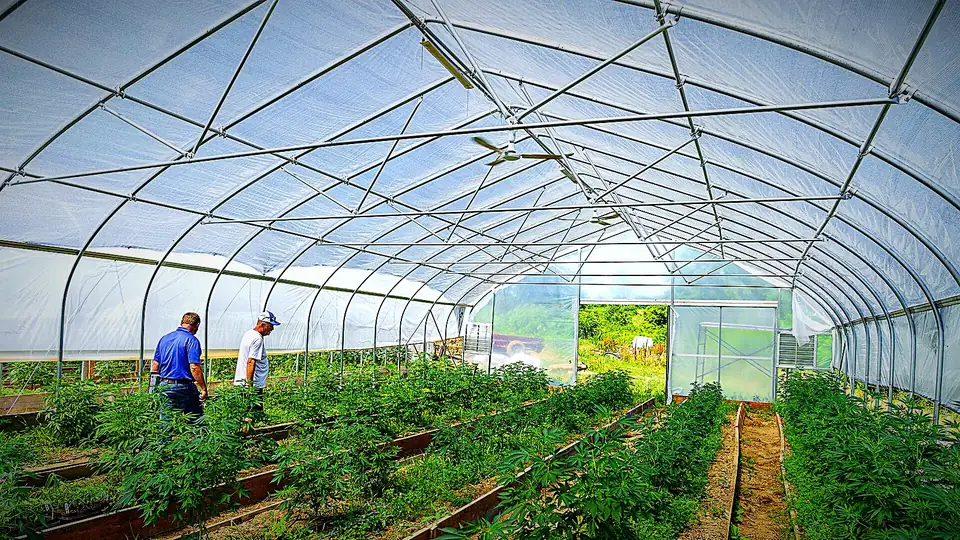
Buy THCA flower from a seller you can check: one that prints a COA for each lot, names the business behind it, picks up the phone, and writes its refund and short-weight rules down before you pay. In states that license adult-use cannabis, a licensed dispensary is the other lane, and it works under different rules.
Last checked Oct. 3, 2026. This guide is about how to judge sellers, including us. It does not rank anyone.
First: which lane are you in?
THCA flower reaches buyers two ways. They look similar on a shelf and are very different in law.
| Hemp-retail lane | Licensed-dispensary lane | |
|---|---|---|
| What it is | THCA flower sold as hemp under the federal delta-9 test | High-THC flower sold as cannabis under a state license |
| Where | Online shops and hemp stores, only where state law allows | Licensed dispensaries in adult-use states, such as CA, CO, MI |
| Who regulates it | State agriculture or hemp programs, plus federal hemp law | The state cannabis regulator |
| Buy by the pound? | Often, HP and LB | Usually no; state possession and purchase limits apply |
| Dec. 11, 2026 | Ordinary THCA flower stops counting as hemp federally | Not affected by the hemp change; state rules continue |
As of Oct. 3, 2026, by our reading of state law, the hemp-retail lane for THCA flower is fully open in five states: Nebraska, North Carolina, Pennsylvania and South Carolina, plus Missouri until its own law takes effect on Nov. 12, 2026. Florida and Wisconsin show up on plenty of “legal” lists. Don’t count on them. Florida’s hemp rule adds 0.877 x THCA into its 0.3% total delta-9 limit (r. 5K-4.034), and Wisconsin’s statute tests delta-9 after decarboxylation, which turns THCA into delta-9 (Wis. Stat. 94.55). The other states restrict the lane, leave it contested or close it. THCA flower is not legal in all 50 states. Check your state’s current law before you order from anyone.
The 10-point seller check
Run any seller through this. It takes about ten minutes, and you can do most of it before you call.
| # | Check | Pass looks like | Fail looks like |
|---|---|---|---|
| 1 | COA per lot | Every listing links a report, and its lot code matches the listing | One generic report for the whole menu |
| 2 | Full panels | Potency plus pesticides, metals, microbials, mycotoxins | Potency only |
| 3 | Total THC shown | THCA, delta-9 and total THC (THCA x 0.877 + delta-9) | Delta-9 only, with “under 0.3%” in bold |
| 4 | Accredited lab | Lab name and ISO/IEC 17025 certificate number on the report | No lab name, or a lab you cannot find |
| 5 | Real business | Legal name, street address, phone number | Contact form only |
| 6 | Written policies | Short weight, lost parcel, wrong item, returns | “All sales final,” nothing else |
| 7 | Honest prices | Price per pound and per gram, no invented “was” price | Strike-through prices that never change |
| 8 | Honest law | Says the law varies by state and names Dec. 11, 2026 | “Legal in all 50 states” |
| 9 | Age check | Asks for 21+ on entry and again at order | No age question at all |
| 10 | Real reviews | A system that invites every buyer, with dates | A wall of five-star quotes with no names or dates |
Six or more passes, with 1, 2 and 5 among them, is a seller worth a call. Fail 1 or 5 and stop there.
How to check a COA is real
A PDF is easy to fake. These steps are not.
- Match the lot. The lot or Batch code on the report must match the product page and the bag.
- Find the lab. Search the lab’s name and city. A real lab has a site, a phone and a client portal or QR code that pulls up the same report.
- Check accreditation. The ISO/IEC 17025 certificate number on the report can be looked up in the accreditation body’s public directory. A2LA, ANAB and PJLA all run one.
- Check the date. A test date months before the product went on sale is worth a question. A test date after you received the flower is a fake.
- Ask. Email the seller the lot code and ask for the lab’s original report. A seller with nothing to hide sends it the same day.
Questions to ask on the phone
- “Which lot is this, and when was it tested?”
- “Is this smalls, greenhouse, light-dep or indoor?” The answer should match the label.
- “What do you do if the bag weighs short?”
- “What happens if the parcel is lost?”
- “How do I pay, and when?”
If the person cannot answer, or wants you to pay before answering, you have your answer.
Payment: what is normal and what is not
Hemp sellers often cannot use the card processors mainstream stores use, so cash apps, Zelle and cash on handover are common. That is not a red flag by itself. These are:
- Gift cards, crypto only, or a wire to a personal account you cannot match to the business name.
- A “release fee,” “insurance fee” or “customs fee” after you already paid.
- A text from a number that is not on the seller’s website.
At THCA Place you do not pay on the site at all. You send an Order Request with a Payment Preference. An Operator calls you, confirms the lot, price and Fulfillment Arrangement, and only then do you pay. In some cities a Local Representative hands the order over in person. Details are on How to order.
Reviews and “best of” lists
Two things to know:
- Fake reviews are illegal. The FTC’s rule on consumer reviews and testimonials, 16 CFR Part 465, in force since Oct. 21, 2024, bans fake reviews, reviews bought for a set sentiment, and undisclosed insider reviews (FTC announcement). Reviews tied to real orders, with dates, carry more weight than a page of anonymous quotes.
- “Best THCA vendor” lists are often ads. Many sit on news sites under labels like sponsored, advertorial or “produced in partnership with.” Use them as a list of names to check, not as a verdict.
Shipping: what the carrier rules say
As of Oct. 3, 2026, USPS accepts hemp and hemp products for domestic mail only when the shipper complies with federal, state and local law, and it requires the shipper to keep lab results and compliance records for three years (USPS Publication 52, section 453; Postal Bulletin hemp update, 2021). A seller who ships THCA flower should be able to show you the COA it keeps for your lot. Carrier, packaging and timing at THCA Place are confirmed on the call, not promised on a product page.
What changes on Dec. 11, 2026
Today, as of Oct. 3, 2026, the federal hemp definition in 7 U.S.C. 1639o tests delta-9 THC only. The amendment passed in November 2025 switches it to total THC including THCA, capped at 0.3% by dry weight, and limits finished hemp-derived cannabinoid products to 0.4 mg total THC per container (CRS IF13136). H.R. 6500, signed Sept. 2, 2026, set Dec. 11, 2026 as the date for naturally occurring cannabinoids like THCA. After that date, “where to buy THCA flower” has a short answer in the hemp lane: you cannot, unless Congress moves the date again. The licensed-dispensary lane in adult-use states carries on under state law.
Sources
- 7 U.S.C. 1639o (Cornell LII)
- CRS In Focus IF13136, Aug. 17, 2026
- H.R. 6500 on Congress.gov
- USPS Publication 52, section 453
- 16 CFR Part 465, eCFR
- State lane status: THCA Place review of state statutes and agency rules, Oct. 2, 2026. Missouri: HB 2641 summary.
Questions
- Where can I buy THCA flower?
- As of Oct. 3, 2026 there are two lanes. Online or in-store hemp sellers can sell THCA flower as hemp where state law still allows it, until the federal rule changes on Dec. 11, 2026. In adult-use states, licensed dispensaries sell high-THC flower under a state cannabis license instead.
- How do I know an online THCA seller is legit?
- Check that every product links a COA whose lot code matches the listing, that the lab is ISO/IEC 17025 accredited, that the business has a real name, phone number and address, and that short-weight, lost-parcel and refund policies are written down before you order.
- Is it legal to have THCA flower shipped to me?
- It depends on your state and the date. As of Oct. 3, 2026, federal law treats THCA flower as hemp if delta-9 THC is at or under 0.3%, but many states close the hemp lane for THCA flower. From Dec. 11, 2026, ordinary THCA flower stops being hemp under federal law.
- Are 'best THCA vendor' lists trustworthy?
- Read the label at the top. Many of these lists are marked sponsored, advertorial or produced in partnership, which means a seller paid for the placement. Use them for names, then run your own checks.